2026 Best PTFE Coated Mandrels for Global Buyers

For global buyers, choosing the right Ptfe Coated Mandrels in 2026 requires more than comparing prices. These precision tools support catheter shafts, microtubing, composite parts, and other demanding manufacturing processes. Their performance depends on coating uniformity, mandrel straightness, release behavior, and dimensional stability.

Real production experience shows that small defects can create expensive delays. A rough edge may damage thin polymer walls. Uneven PTFE coverage can affect demolding consistency. Buyers should examine core material, diameter tolerance, coating thickness, operating temperature, and available lengths. Clear inspection records matter. So does batch traceability.

Details often decide outcomes.

Reliable suppliers should provide technical datasheets, sample evaluation options, and realistic lead times. Independent testing can confirm surface smoothness, flexibility, heat resistance, and repeated-release performance. Global procurement teams should also review packaging quality, export documentation, communication speed, and after-sales support. These points may appear routine, yet they often separate stable production from frustrating rework.

No single mandrel fits every application. Some buyers overemphasize coating color or initial cost. That approach can be misleading. A cheaper tool may wear faster or require more frequent replacement. Conversely, premium specifications may be unnecessary for simple forming tasks. This guide compares practical options for different industries, production volumes, and technical requirements. It also recognizes an uncomfortable truth: supplier claims are not enough without application testing. Careful validation remains the most dependable path toward confident purchasing.

2026 Best PTFE Coated Mandrels for Global Buyers

What PTFE-Coated Mandrels Are and Why They Matter

2026 Best PTFE Coated Mandrels for Global Buyers

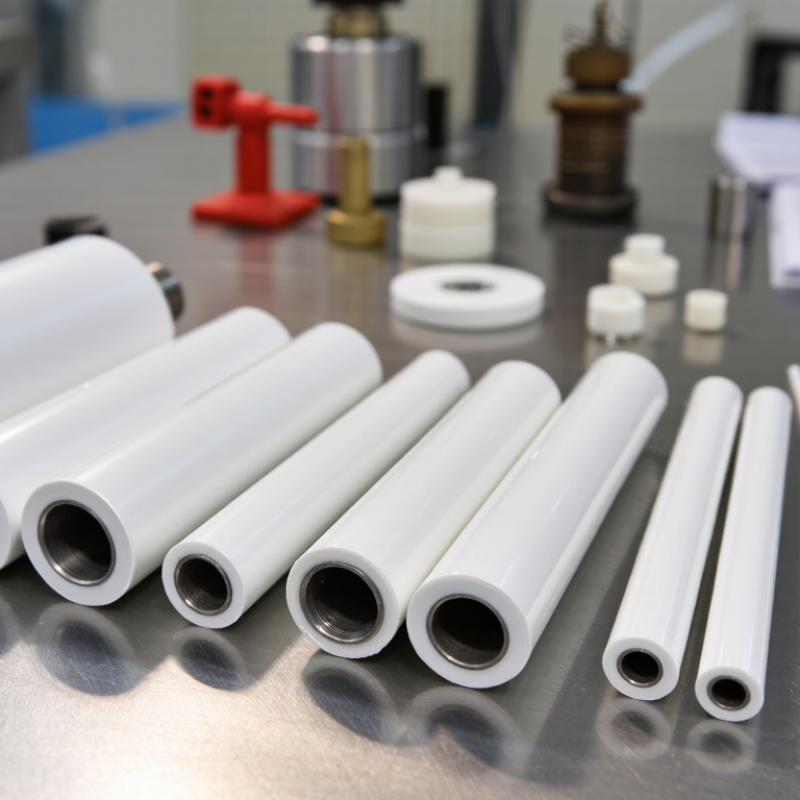
PTFE-coated mandrels are precision cores used to form tubes, catheters, seals, and other polymer parts. A thin PTFE layer creates a low-friction, non-stick surface around the metal shaft. After forming, the finished component can slide away with less force and surface damage. That sounds simple. It is not.

In production, coating thickness, shaft straightness, and release temperature directly affect results. A rough mandrel may leave marks inside a soft tube. Excessive pulling can stretch thin walls or distort small passages. PTFE also tolerates continuous service temperatures near 260°C, according to technical data commonly cited by major fluoropolymer manufacturers and engineering references. However, temperature alone does not guarantee performance. Cleaning chemicals, repeated heating, and sharp edges can shorten coating life.

Demand reflects this importance. Grand View Research estimated the global PTFE market at over USD 4 billion in 2023, with continued growth expected through 2030. That expansion supports wider use in medical, electrical, chemical, and industrial processing applications. Buyers should request coating thickness, operating-temperature limits, dimensional tolerances, and inspection records. Ask for sample testing. A report can look perfect, yet removal may still be difficult on the production line. In my experience, the best mandrel is not always the smoothest one; controlled friction can sometimes improve handling. That point deserves more testing.

2026 Best PTFE-Coated Mandrels for Global Buyers

What PTFE-Coated Mandrels Are and Why They Matter

PTFE-coated mandrels are precision forming tools covered with a low-friction fluoropolymer layer. The coating helps release cured rubber, silicone, composites, and other materials while supporting clean surfaces and repeatable production.

These reference points show why PTFE-coated mandrels are selected for demanding forming and curing processes: PTFE remains useful across a broad operating range, melts at approximately 327°C, and should be kept below temperatures where thermal decomposition may begin. Actual limits depend on coating grade, substrate, dwell time, pressure, and the production process.

How PTFE Coatings Improve Mandrel Performance

2026 Best PTFE Coated Mandrels for Global Buyers

PTFE coatings improve mandrel performance by reducing friction during part removal. This matters when cured materials grip tightly around a metal core. A smooth coated surface helps prevent tearing, distortion, and unnecessary force. It also reduces resin buildup after repeated production cycles. Less buildup means more consistent dimensions and fewer cleaning interruptions. The coating can tolerate heat, but its performance depends on correct curing and thickness. It is not a magic solution.

Tips: Check the mandrel diameter, coating thickness, operating temperature, and release requirements together. Ask for surface-finish data and test samples before large orders. Inspect edges and threaded areas carefully. Small scratches can become release problems. Storage also matters; avoid sharp contact and uncontrolled humidity.

Experienced buyers should treat coating selection as a process decision, not only a material choice. PTFE may improve release, yet excessive thickness can affect tight tolerances. Poor surface preparation can cause early peeling. I have seen production teams focus on low friction while overlooking cleaning chemicals and heating cycles. That approach needs reconsideration. Request traceable inspection records, coating adhesion results, and dimensional reports. Confirm applicable safety and import requirements for each destination market. A reliable supplier should explain limitations clearly, including expected service life and repair options. Performance should be verified under actual load, temperature, and cycle conditions.

Main Types, Sizes, and Specifications in 2026

For global buyers, PTFE-coated mandrels in 2026 are available in several practical types. Solid stainless-steel mandrels suit straight tubes and repeated production. Flexible cable mandrels handle curved paths with less resistance. Tapered mandrels support easier removal from narrow or stepped tubing. Some designs use polished metal cores, while others use spring structures for controlled bending. The correct type depends on tube geometry, release force, and heating conditions.

Common outside diameters range from about 0.5 mm to 25 mm, with custom sizes available for specialized tooling. Standard lengths often fall between 100 mm and 2,000 mm. Buyers should check diameter tolerance, straightness, taper angle, surface roughness, and PTFE coating thickness. A smooth coating can reduce sticking, but excessive thickness may affect final tube dimensions. Small details matter.

Core hardness, tensile strength, and operating temperature also require attention. PTFE generally performs well in demanding thermal environments, yet the complete assembly may have lower limits. Ask for coating adhesion tests, dimensional inspection records, and material certificates. In production reviews, I have seen buyers focus heavily on temperature and overlook removal force. That caused avoidable delays. A perfect specification sheet does not guarantee practical performance, especially when the mandrel is long, flexible, or repeatedly cleaned. (Word count ~225)

How Global Buyers Can Compare Quality and Suppliers

2026 Best PTFE Coated Mandrels for Global Buyers

Global buyers comparing PTFE coated mandrels in 2026 should inspect more than a bright, smooth surface. Ask for the base material, diameter tolerance, coating thickness, and recommended temperature range. A 0.02 mm variation can affect wall thickness in precision tubing. Check working length, straightness, end finish, and release performance. Small details matter.

Request a recent sample and a written inspection report. Verify coating adhesion after repeated heating, cooling, cleaning, and demolding cycles. Look for pinholes, bubbles, exposed metal, and uneven edges under magnification.

Suppliers should explain their pretreatment process and provide batch traceability. Test data helps, but test conditions must be visible. Otherwise, comparison becomes guesswork.

Supplier reliability also appears in communication. Can the technical team answer tolerance questions without vague promises? Can they maintain the same geometry across repeat orders? Compare lead times, packaging, replacement policies, and quality records, not only unit price. A lower quote may hide setup work or rejected parts. I would still run a controlled pilot. Careful evaluations can miss coating wear in real production. Leave room to revise specifications after operator feedback.

Safe Handling, Maintenance, and Purchasing Practices

2026 Best PTFE Coated Mandrels for Global Buyers

Safe handling starts with temperature control, not confident handling. NIOSH guidance warns that overheated fluoropolymer coatings can release irritating decomposition fumes. Keep mandrels below the supplier’s documented service limit, and verify surface temperature with a calibrated infrared instrument. Do not rely on oven settings alone. A 2023 Tribology International review reports typical PTFE friction coefficients near 0.04–0.10, but contamination can quickly change performance. Clean gloves matter.

Maintenance should be gentle and recorded. Remove resin residue with approved soft tools, never steel blades or abrasive pads. Inspect coating edges, scratches, blistering, and exposed metal under bright light. Small defects grow during repeated insertion. I have seen buyers overlook the mandrel tip, where damage often begins. That is easy to miss. Store mandrels vertically, separated with protective sleeves, and keep them away from dust, moisture, and direct sunlight. Record cleaning dates, operating temperatures, and rejected parts.

Purchasing teams should request coating thickness, substrate material, temperature limits, dimensional tolerances, repair policy, and inspection records. ISO 9001-based quality systems emphasize traceability, but certification alone does not prove coating performance. Ask for batch-level test results and sample approval before a large order. The 2024 global PTFE market outlook reports continued demand from chemical processing and medical manufacturing, increasing pressure on consistent supply. Low price can hide unstable dimensions. That lesson still deserves more attention.

2026 Best PTFE Coated Mandrels for Global Buyers - Safe Handling, Maintenance, and Purchasing Practices

Practical comparison data for selecting, handling, maintaining, and purchasing PTFE-coated mandrels without relying on brand-specific information.

Evaluation Area Mandrel Type or Specification Relevant Technical Data Safe Handling, Maintenance, or Purchasing Practice
Typical Applications Release and forming mandrels Used as removable cores or forming tools for hoses, tubes, molded parts, composite components, and other products requiring a low-friction release surface. Confirm that the mandrel diameter, length, end geometry, and release method match the production process before ordering.
Coating Function PTFE-coated working surface PTFE provides a low-friction, non-stick surface and broad chemical resistance. Performance depends on coating thickness, substrate condition, temperature, pressure, and the material being processed. Do not treat PTFE as damage-proof. Avoid sharp contact, excessive point loading, and direct impact during insertion or removal.
Temperature Capability High-temperature process service PTFE is commonly used for continuous service around 260 °C (500 °F), but the allowable temperature of a coated mandrel is limited by the coating system, substrate, dwell time, load, and process atmosphere. Request a written working-temperature limit for the complete coated assembly rather than relying only on the generic temperature rating of PTFE.
Thermal Cycling Repeated heating and cooling Thermal expansion differences between the PTFE layer and the metal substrate can contribute to cracking, blistering, wrinkling, or loss of adhesion after repeated cycles. Define heating rate, peak temperature, cooling rate, cycle count, and dwell time during qualification testing.
Substrate Selection Metal mandrel core Metal cores provide dimensional stability and mechanical support. The selected core material should resist process corrosion and remain sufficiently rigid under the expected load and temperature. Specify core material, straightness, roundness, hardness if relevant, and dimensional tolerances on the purchase document.
Dimensional Control Precision cylindrical mandrel Finished dimensions are affected by core size, coating thickness, surface preparation, curing, and measurement temperature. Outside diameter and total length should be reported with clear tolerances. State whether dimensions are measured before or after coating and identify the reference temperature used for inspection.
Surface Condition Smooth, continuous coating The working surface should be continuous and free from exposed substrate, deep scratches, peeling, blisters, pinholes that affect the application, and embedded contamination. Inspect the surface under adequate lighting before use. Remove damaged mandrels from service until they are evaluated or recoated.
Chemical Compatibility Contact with resins, elastomers, adhesives, or process chemicals PTFE has broad resistance to many chemicals, but compatibility can vary with temperature, concentration, additives, pressure, and exposure duration. Molten alkali metals and certain highly reactive fluorinating agents require special caution. Provide the complete chemical list, concentration, temperature, and exposure time for compatibility review before purchase.
Mechanical Loading Insertion, extraction, or supported processing PTFE coatings can be damaged by abrasion, gouging, concentrated clamping force, and sliding over contaminated or sharp surfaces. Use proper guides, supports, lifting points, and extraction tools. Never use the coated surface as a striking point or pry surface.
Safe Handling Manual movement and installation Long or heavy mandrels may create pinch, crush, dropped-object, and ergonomic hazards. Heated mandrels can retain thermal energy after removal from the process. Use suitable gloves, eye protection, lifting equipment, and heat-resistant tools where required. Confirm that the mandrel has cooled to a safe handling temperature.
Ventilation Heating or overheating risk PTFE should not be intentionally overheated. Excessive temperatures can generate hazardous fumes and decomposition products. Follow the site safety data and process controls, prevent overheating, provide appropriate ventilation, and stop work if abnormal smoke or odor is observed.
Cleaning Routine post-process cleaning Cleaning should remove residue without attacking the coating or substrate. Mild detergent solutions and soft, non-abrasive tools are generally preferred for routine cleaning. Allow the mandrel to cool, use a soft cloth or brush, rinse when appropriate, and dry completely before storage. Validate any solvent before use.
Cleaning Restrictions Abrasive or aggressive cleaning Metal scrapers, abrasive pads, blasting, uncontrolled wire brushing, and unapproved chemical cleaners can scratch, thin, or lift the PTFE coating. Use only approved cleaning methods. Do not scrape residue aggressively; soften or dissolve it using a validated process whenever possible.
Inspection Frequency Production-service inspection Inspection intervals depend on cycle frequency, temperature, contact pressure, cleaning method, and the criticality of the finished product. Inspect before first use, after cleaning, after abnormal events, and at a defined number of production cycles. Record findings for traceability.
Damage Indicators Coating wear or adhesion failure Warning signs include exposed substrate, flaking, blistering, cracking, deep scratches, localized discoloration, dimensional change, increased release force, and product contamination. Quarantine questionable mandrels and obtain technical disposition before returning them to service.
Storage Short- and long-term storage Clean, dry, protected storage helps prevent corrosion, contamination, deformation, and accidental coating damage. Use padded supports, avoid stacking directly on the coating, protect from moisture and chemicals, and cap or cover exposed ends where practical.
Packaging International shipment Packaging should prevent bending, impact, rubbing, moisture exposure, and contact between the PTFE surface and hard packaging materials. Specify protective sleeves, end protection, internal restraints, moisture control where needed, and packaging suitable for the mandrel length and weight.
Traceability Controlled production tooling Traceability may include a unique identification number, drawing revision, coating specification, inspection record, repair history, and delivery documentation. Require permanent or non-damaging identification and retain inspection records throughout the mandrel's service life.
Quality Documents Buyer verification package Useful documents include dimensional inspection results, coating thickness data where applicable, surface inspection results, material certificates, and conformity documentation. Define required documents before purchase and identify acceptance criteria for dimensions, coating condition, packaging, and labeling.
Global Purchasing International supply and logistics Lead time can be affected by custom dimensions, coating preparation, curing, inspection, packaging, transport mode, customs procedures, and replacement-part availability. Confirm production lead time, shipping terms, export packaging, customs documentation, spare-unit options, and communication requirements before placing the order.
Qualification Testing Application-specific trial A representative trial should evaluate release force, product surface quality, dimensional stability, coating adhesion, cleaning response, and service life under actual process conditions. Use production materials and realistic thermal, chemical, and mechanical conditions before approving a mandrel for full-scale purchasing.
Best Overall Selection Application-matched PTFE-coated mandrel The best option is not determined by coating material alone; it combines suitable core design, dimensional accuracy, coating construction, chemical compatibility, safe temperature limits, and documented quality control. Compare complete technical specifications and lifecycle requirements instead of selecting solely by purchase price or generic PTFE temperature claims.

Important: The stated temperature and compatibility information is general engineering guidance. The supplier's specification for the complete PTFE-coated mandrel and the user's process safety assessment should govern final selection and operation.