How to Choose a PEEK Extrusion Supplier in 2026?
Choosing a Peek Extrusion supplier in 2026 means looking beyond a polished brochure or a low quote. PEEK is a demanding engineering polymer. Its processing history, temperature control, and dimensional consistency can shape a part’s performance. A supplier should explain how it manages those variables, not just promise “tight tolerances.” Ask for process records, inspection methods, material traceability, and examples of comparable work. Details matter.
A useful evaluation also includes practical questions: Can the supplier hold a stable melt process across production runs? How are tooling changes and rejected parts handled? What measurements accompany each shipment? Request a sample and inspect its dimensions, surface, and documentation. Then discuss lead times, minimum order quantities, and how design changes affect cost. Small gaps in communication can become expensive later.
Polymer-processing scholar Donald G. Baird is a relevant technical reference, but the supplied material contains no verifiable, topic-specific quotation from him. Rather than invent one, this guide treats evidence as the standard: ask suppliers to show their methods and results. That may feel less dramatic. It is more useful. The sections ahead compare technical capability, quality systems, equipment, communication, and total cost, helping buyers build a shortlist grounded in observable facts. A supplier’s answers should be specific, consistent, and open to scrutiny. Good claims need proof.
Define Your PEEK Extrusion Requirements
A reliable PEEK extrusion brief starts with the part’s real working conditions, not just its drawing. State whether the component faces continuous heat or occasional temperature spikes, and describe the chemicals, moisture, and mechanical loads it will encounter. Include the required grade, profile, dimensions, tolerances, and expected service life. Details matter. “High temperature” alone is too vague; a supplier needs an actual operating range.
Clarify what counts as acceptable variation. For a tube, specify the inner and outer diameters, wall thickness, and measurement points. For a profile, identify critical surfaces and features. Also state the required length, cut-end condition, color, and surface expectations. Small differences count. If parts will be assembled with other components, provide the mating dimensions or a sample when possible.
Estimate annual demand, order quantities, and delivery schedule, while noting whether demand may change. Ask how the supplier will verify dimensions, manage lot traceability, and document material grade. A first-article inspection or small trial run can reveal issues before production scales up. It is tempting to define every detail at once, but some requirements only become clear after testing. Record those uncertainties and agree on how changes will be reviewed.
Assess Supplier Materials and Processing Capabilities
A reliable PEEK extrusion supplier should explain how its material choices match your part’s operating conditions. Ask whether the resin grade suits the required temperature, chemical exposure, and mechanical load. Request lot-specific documentation, including grade identification and traceability. A certificate alone is not enough; check that the information matches your specification.
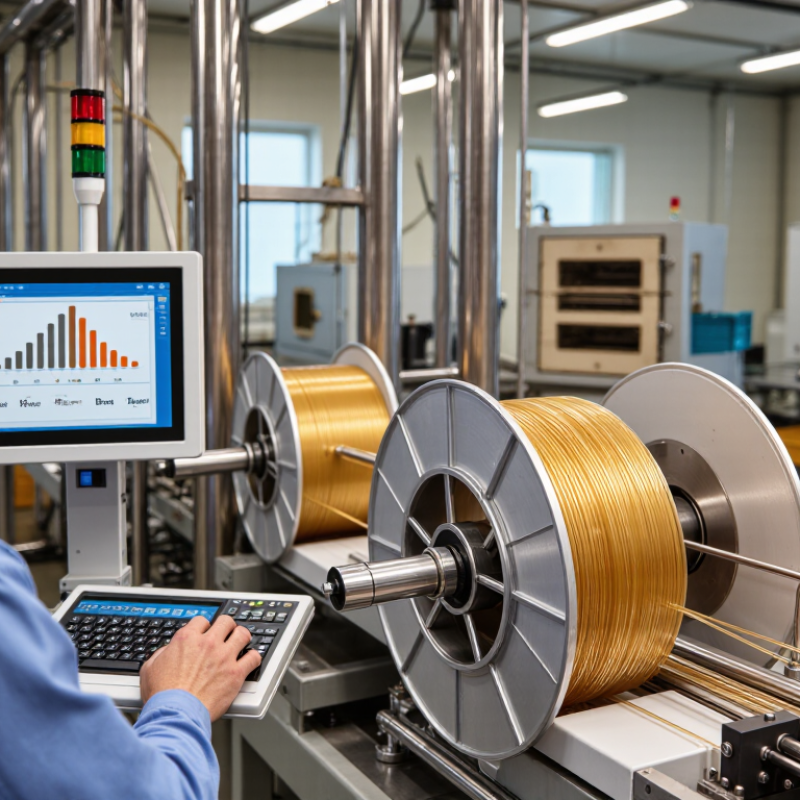
Processing control matters just as much. Ask how the supplier monitors melt temperature, screw speed, and die conditions during production. These settings can affect surface finish, dimensions, and consistency along a profile. Find out how resin is stored and conditioned, and whether process changes are recorded. Request sample lengths and inspect them for straightness, wall thickness, and visible defects. A small trial may reveal issues that a polished capability sheet will not. No supplier is perfect; clear answers and repeatable measurements matter more than confident promises.
Tips: Ask for actual inspection data from a recent run. Compare tolerances with your drawing, not a general brochure. If a response is vague, ask how the measurement was taken. Keep one sample for later comparison. And leave room for questions; some details may need a second review.
Verify Quality Systems and Product Consistency
How to Choose a PEEK Extrusion Supplier in 2026?
Verify Quality Systems and Product Consistency
When comparing PEEK extrusion suppliers, ask to see how quality is controlled in daily production. A current quality-system certificate can be useful, but it does not prove every batch meets your requirements. Ask for inspection procedures, equipment calibration records, and examples of corrective actions. Look at the details.
Request inspection data from several production lots, not just one selected sample. Compare outside diameter, wall thickness, ovality, length, and surface condition against agreed tolerances. For heat-sensitive applications, ask how extrusion temperature and cooling conditions are monitored. Check that measurement tools have identifiable calibration dates.
A dependable supplier should be able to trace each shipment to its resin lot, production date, and inspection results. Ask how nonconforming material is isolated and how process changes are approved and communicated. It is not glamorous. Run your own incoming checks across multiple deliveries; repeated measurements can reveal variation that a single sample cannot. No quality system guarantees perfect output, and your test method may not match the supplier’s. Agree on measurement methods and acceptance limits before production scales.
How to Choose a PEEK Extrusion Supplier in 2026?
Verify Quality Systems and Product Consistency
Suggested buyer-defined evaluation weights—not an industry survey or universal standard. Review quality-system records, lot traceability, dimensional inspection data, certificates of analysis, change control, and corrective-action records. Tailor the weighting to the intended application and applicable requirements.
Compare Lead Times, Customization, and Technical Support
How to Choose a PEEK Extrusion Supplier in 2026?
Compare Lead Times, Customization, and Technical Support
Lead time depends on more than a supplier’s quoted number. Standard tubing or rod may ship faster than a custom profile that needs new tooling and process trials. Ask what the estimate includes: tooling, first-article inspection, and production. Small details matter. Request a schedule for samples and repeat orders, not just the first shipment. Then compare it with your project’s actual deadlines.
Tips: Send a clear drawing with dimensions, tolerances, and expected quantities. Ask how the supplier checks dimensions and records each production lot. For custom parts, confirm whether sample revisions affect the delivery date. Get key assumptions in writing.
Customization is useful only when the supplier can explain its limits. Discuss wall thickness, profile complexity, and how requested tolerances will be verified. A capable technical team should ask practical questions about the part’s use and operating conditions, rather than simply promise a match. Ask for material documentation and inspection records relevant to your specification. These details help you assess consistency, though they cannot guarantee every future run will be identical. Be cautious of vague assurances. I would also leave room for a trial order; it can reveal issues a polished quotation misses.
Evaluate Compliance, Costs, and Long-Term Reliability
How to Choose a PEEK Extrusion Supplier in 2026?
Evaluate Compliance, Costs, and Long-Term Reliability
A dependable supplier should explain how each production lot is identified, inspected, and documented. Ask for material traceability, dimensional inspection records, and clear procedures for handling product changes. Confirm which quality standards apply to your use, then request evidence rather than relying on a logo or broad promise. Paperwork matters. It should match the material and profile you will actually buy.
Compare the full cost, not only the price per meter. Scrap, setup charges, minimum order quantities, packaging, and lead times can change the real budget. Ask how the supplier controls wall thickness and profile dimensions, and whether sample runs can be checked against your drawing. A low quote may still be the right choice, but only if delivery and consistency hold up. No supplier is flawless.
Long-term reliability shows in repeat orders. Ask how production records are retained, how delays are communicated, and whether capacity can support forecast changes. It is easy to overvalue a polished audit file; actual inspection records and samples offer useful checks. Consider testing an initial batch in your own process before committing to larger volumes. Note any gaps, even small ones, and agree on measurable acceptance criteria.