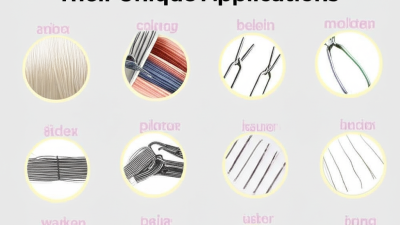
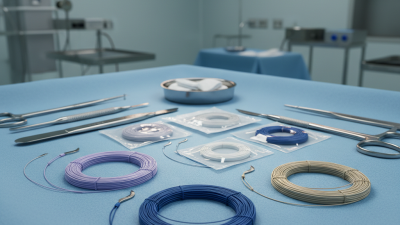
Choosing Medical Sutures for global procurement requires more than comparing unit prices. These products support wound closure, tissue healing, and surgical confidence. Their performance can influence operating-room efficiency and patient outcomes. Procurement teams should examine material type, needle design, tensile strength, absorption profile, packaging, and shelf life. Small differences matter.
Reliable suppliers provide clear technical documents, batch records, sterilization information, and traceability data. These details help hospitals verify product consistency before products reach the operating room. A practical evaluation may include sample testing, package inspection, and review of previous supply performance. The carton should arrive dry, sealed, and clearly labeled. It should not look like an afterthought.
Global purchasing also depends on stable production and responsive communication. Experienced manufacturers can explain manufacturing controls, quality checks, and handling requirements without vague promises. They should support documentation for local regulatory review and maintain consistent specifications across repeat orders. Yet no supplier is perfect. A polished brochure cannot replace independent verification, clinical feedback, or careful risk assessment. Buyers may overlook storage conditions, delivery delays, or differences between regional requirements. That mistake can become expensive.
Medical Sutures are therefore best selected through evidence, not assumptions. Compare performance data, inspect samples, and ask precise questions about every lot. A dependable partnership develops slowly. It is built through transparent records, realistic delivery commitments, and measurable quality. For global procurement, confidence should be earned shipment by shipment.
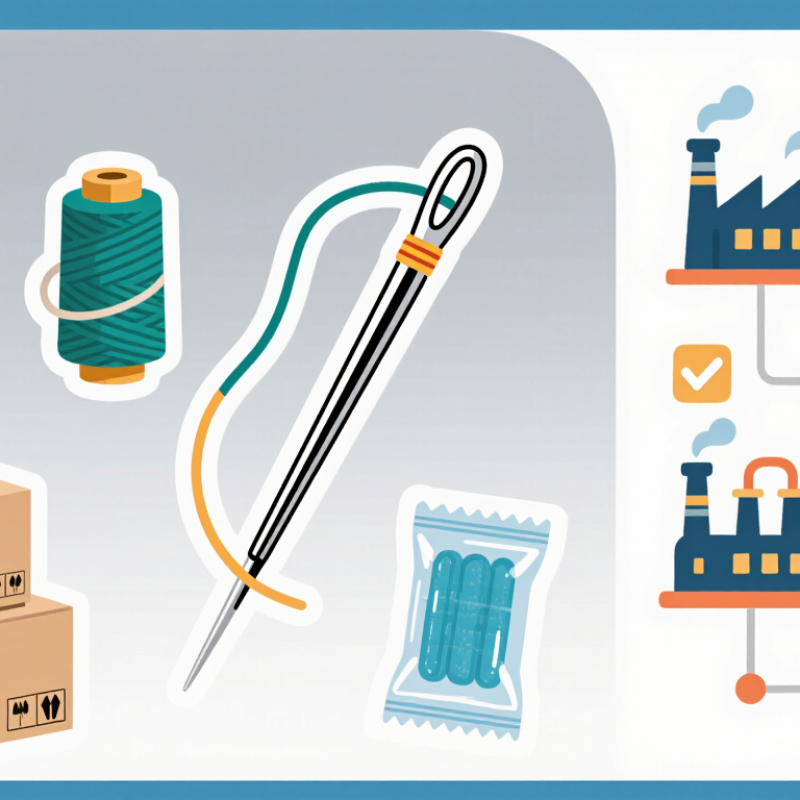
Why Choose Medical Sutures for Global Procurement?
The World Health Organization has reported approximately 234 million major operations worldwide each year. This figure gives medical sutures practical meaning. Every incision requires dependable closure, whether in a rural clinic or a high-volume surgical center. However, 234 million operations do not equal 234 million suture units. One procedure may require several needles, lengths, and closure techniques. That distinction matters when planning international procurement.
Medical sutures should be evaluated through clinical use, not price alone. Absorbable sutures can support internal tissue during healing. Non-absorbable options may suit skin closure or long-term support. Needle shape, curvature, tensile strength, coating, and sterilization method affect handling. In practice, small packaging details can matter greatly. Clear labeling helps staff select the correct size quickly. Traceable lot information supports stock control and quality investigations. A weakness remains: purchasing teams may compare specifications without observing real operating conditions. That approach deserves review.
Tips: Build demand estimates from procedure types, not population size alone. Include emergency reserves for fragile supply routes. Check shelf life before shipment. Confirm packaging integrity after transport. Ask clinical users to test needle penetration and knot security. Document feedback from surgeons and nurses. Local regulations and hospital protocols must guide final selection. A reliable supply system is not simply large; it is measurable, adaptable, and honest about uncertainty.
Defining Medical Sutures Through the WHO’s 234 Million Annual Operations
A WHO-cited global estimate reported approximately 234.2 million major surgical operations per year worldwide. Since sutures are used to close or support surgical wounds, this scale highlights the importance of consistent quality, sterile packaging, material traceability, and dependable supply continuity in global procurement. The figure is an annual global estimate based on 2004 data, not a current forecast.
Source: Weiser TG et al., “An estimation of the global volume of surgery,” The Lancet, 2008; cited in WHO surgical safety resources.
Why Choose Medical Sutures for Global Procurement?
Suture selection begins with tissue healing, not price alone. Absorbable sutures gradually lose strength and break down inside the body. Common materials include polyglactin, poliglecaprone, polydioxanone, and gut-based options. Their absorption rates differ.
Absorbable sutures often suit buried closures, soft tissue repair, and selected gastrointestinal procedures. A rapidly absorbing material can support skin edges briefly. A slower option may protect fascia during longer healing periods. Material behavior matters. Braided sutures can handle well, but their structure may increase tissue drag or bacterial retention. Monofilament sutures usually pass smoothly through tissue. They can also be harder to knot securely.
Nonabsorbable sutures retain strength for extended periods. Nylon and polypropylene are often used for skin closure, vascular repair, and tendon-related procedures. Polyester can provide strong handling in selected applications. Stainless steel may serve in specific orthopedic or sternum repairs. Some nonabsorbable sutures require later removal, while others remain permanently. It depends on tissue, location, and clinical judgment.
Global procurement adds practical concerns. Buyers should verify material composition, diameter, needle geometry, sterilization method, packaging integrity, and lot traceability. Regulatory documentation must match the destination market. Clinical teams also need consistent knot performance across batches. No selection rule works everywhere. A low-cost suture can become expensive when it causes irritation, delayed removal, or replacement surgery. In practice, product trials and clinician feedback should challenge the purchasing specification. Mistakes happen, especially when catalog descriptions appear similar.
Global procurement of medical sutures should begin with documented compliance, not a low unit price.
The WHO Global Patient Safety Report 2024 states that about one in ten patients experiences harm during healthcare, and more than half of this harm is preventable. Suture quality matters because the product remains in direct contact with tissue. Small defects can create serious clinical consequences.
Verify the ISO 13485 certificate before purchase. Check the legal manufacturer, production site, certificate scope, expiry date, and auditing body. The scope should cover the specific suture type, not only general medical devices.
ISO 10993 evidence is equally important. Ask for a biological evaluation plan, material composition, test reports, and risk-based justification. A “biocompatible” claim is not enough. Review contact duration, sterilization method, and relevant endpoints, including irritation, sensitization, and cytotoxicity.
USP <1> addresses sterility expectations, but one certificate cannot prove every shipment is sterile. Request sterilization validation, routine release records, packaging integrity results, and batch traceability.
For ethylene oxide sterilization, review residual testing and aeration controls. The WHO Global Report on Infection Prevention and Control 2022 estimates that hundreds of millions of patients acquire healthcare-associated infections each year, showing why sterile barriers deserve careful review.
Procurement teams sometimes accept scanned certificates too quickly. That is a weakness. Verify documents directly, compare lot numbers, and retain samples when practical. Perfect paperwork does not replace technical judgment.
Sterility assurance is central when sourcing medical sutures across multiple markets. A reliable evaluation begins with the validated sterilization method, not a certificate alone. ISO 11135 applies to ethylene oxide sterilization. It requires controlled cycles, biological indicators, and monitoring of process parameters. Reviewers should also examine aeration records and residual ethylene oxide testing. Poorly controlled aeration may leave residues inside sealed pouches.
ISO 11137 supports radiation sterilization, including dose establishment and routine dose audits. Dose mapping helps identify the least-exposed location in a full shipping configuration. That detail matters when cartons contain dense suture trays. ISO 17665 addresses moist heat sterilization. It requires documented control of steam, temperature, pressure, and exposure time. Packaging compatibility also deserves close attention. A sterile barrier can fail during transport, even when the sterilization cycle passed.
During procurement, request validation summaries, routine release criteria, and change-control procedures. Check whether the tested load matches the commercial load. It often does not. Ask for packaging integrity data after shipping simulation and aging studies. Traceability should connect the batch, sterilization run, operator review, and release decision. These records support technical assessment and supplier accountability. Still, paperwork has limits. A well-written report cannot replace independent questioning, sample inspection, and periodic reassessment. Small inconsistencies may reveal larger process weaknesses.
Medical sutures are small, but their procurement risks are not. Global plans should begin with lead-time evidence, not optimistic averages. The World Health Organization reported that global health spending reached US$9.8 trillion in 2021. That scale magnifies every late shipment, damaged carton, or missing lot record. Ask suppliers for historical lead-time ranges, not one promised number. Separate manufacturing, inspection, customs, and final-delivery time. Keep safety stock according to procedure volume and variability. Not guesswork.
Demand data should connect operating rooms, distributors, and regional forecasts. Track suture type, size, material, expiry date, and monthly usage. A sudden rise in trauma procedures can change demand quickly. The World Health Organization identifies more than two million medical device types globally, showing why detailed classification matters. Review forecasts every month, especially before seasonal surges.
Our models will still be wrong. That is normal. The important point is correcting them early.
Traceability must remain practical. The U.S. Food and Drug Administration’s Unique Device Identification framework supports device identification through distribution and use. Procurement teams should link each shipment to a lot number, certificate, production date, and destination. Scan cartons when they arrive, not days later. Investigate gaps immediately. One missing record can delay a recall review or create unnecessary stock quarantines. Supplier scorecards should measure delivery variation, documentation accuracy, complaint response time, and data completeness. Price matters, but unreliable data costs more.
As a trusted co-development partner, Teleflex Medical OEM supports industry leaders in the design and development of medical devices with the unparalleled expertise that improves speed, flexibility, and value.
©2025 Teleflex Incorporated. All rights reserved. Teleflex, EPIC Medtec, Force Fiber Fusion, and “Work With The Experts” are trademarks or registered trademarks of Teleflex Incorporated in the U.S. and other countries. Additional trademarks are property of their respective owners.