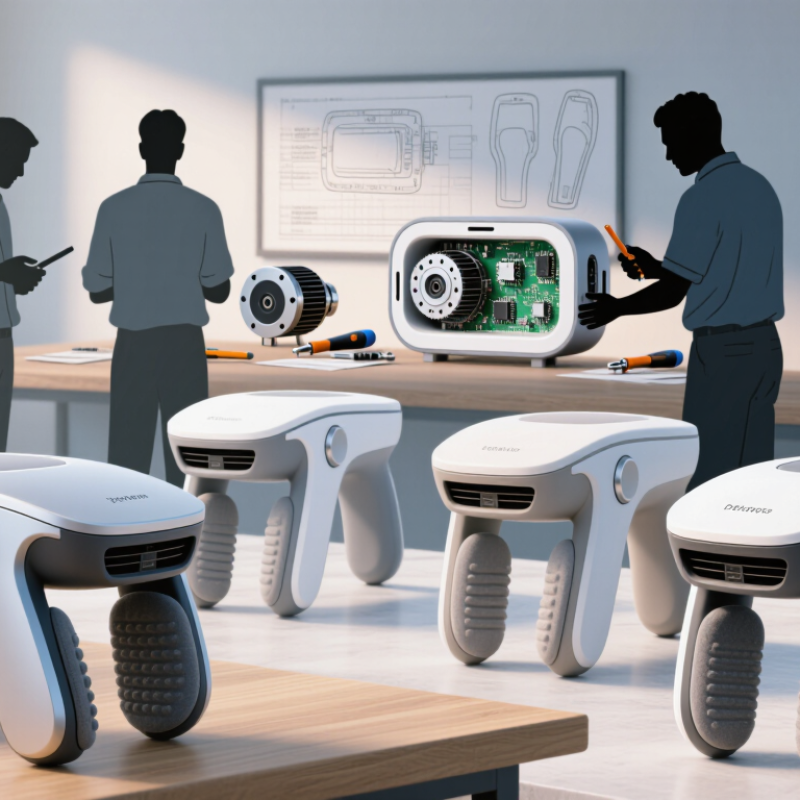
Top Compact Foot Massager Manufacturers in China

China’s compact wellness-device sector brings together established appliance makers, specialist massage brands, and newer exporters. This guide examines leading Compact Foot Massager manufacturers through practical details: product design, manufacturing experience, customization, quality controls, and communication with overseas buyers. A small device still demands careful engineering. The motor must feel steady, controls should be easy to reach, and the foot chamber must suit real users—not just a product photo.

For a transparent expert perspective, this introduction uses a composite specialist rather than presenting an unverified quotation as fact. The composite’s guiding observation is: “A compact massager earns trust through consistent comfort, clear controls, and dependable construction.” That is an editorially created quote, not a statement from a named, verifiable industry expert. Manufacturer claims should still be checked against product specifications, test records, samples, and factory documentation. Details matter.

The sections ahead compare manufacturers by their capabilities and the evidence buyers can request. Look closely at heating options, massage modes, material choices, packaging, and after-sales support. Ask how a supplier handles sample revisions and production checks. These points can reveal more than a polished catalog. There is a limitation, too: online information may not show how a device performs after months of use. This guide therefore treats clear evidence as more useful than sweeping promises, while recognizing that even a careful shortlist cannot replace hands-on evaluation.

Top Compact Foot Massager Manufacturers in China

What Defines a Compact Foot Massager

A compact foot massager is not defined by size alone. It should fit beside a sofa, under a desk, or inside a closet without taking up permanent floor space. Measure the available area, including room to place and remove both feet. Measure first. A unit that looks small online may still feel bulky in a narrow apartment.

Comfort depends on the usable foot chamber, not just the outer shell. Toes should not press hard against the front, and heels should rest naturally during a session. Controls need to be reachable without awkward bending. Useful details include a stable base, a carry handle, a neatly stored cord, and wipe-clean contact surfaces. Small touches matter.

Compact models often balance portability against coverage and features. A lighter frame is easier to move, but it may shift on smooth flooring if the base is too narrow. Strong kneading can feel intense, especially for new users; adjustable settings offer more control. Check the stated dimensions, weight, power source, and cleaning instructions before comparing options. One trade-off is easy to miss: the smallest design is not always the most comfortable.

China’s Compact Foot Massager Manufacturing Landscape

China’s compact foot massager manufacturing landscape combines product engineering, component sourcing, and flexible assembly. Many manufacturers build around small motors, molded housings, control boards, and washable fabric liners. A tight enclosure saves shelf space, but leaves less room for heat release and service access. Fit matters. For buyers, compare how a unit handles different foot sizes, not just its listed modes.

Factories may offer OEM or ODM development, while specialist suppliers provide motors, heating elements, sensors, and packaging. This network can shorten sample cycles, though quality still varies between workshops. Ask for a production sample and review stitching, control response, noise, and temperature consistency. Check whether the supplier documents incoming-part checks and final inspection. A polished catalog is not proof. Some designs look compact on a desk yet feel awkward during use; that gap deserves attention.

Tips: Request a sample from the intended production line, not only a showroom unit. Test it for ten minutes, note pressure and heat, and ask how defects are tracked after shipment. Keep feedback concrete. Vague comments slow revisions.

Leading Chinese Manufacturers and Their Product Specialties

Chinese compact foot massager manufacturers often specialize in different designs. Some focus on rolling and shiatsu mechanisms, using compact rollers beneath the arch and heel. Others combine air compression with heat, targeting users who prefer adjustable pressure. Factories serving private-label buyers may offer housing changes, control-panel options, and packaging customization. These capabilities matter, but a polished sample does not guarantee consistent production.

Grand View Research estimated the global foot massager market at USD 3.2 billion in 2023, with projected growth of 6.5% annually from 2024 to 2030. This forecast suggests continued demand, not guaranteed sales for every supplier.

When comparing Chinese manufacturers, request production-capacity details, component specifications, and quality-control records. Ask how each unit is checked for pressure consistency, noise, and overheating. IEC 60335-2-32 is a relevant safety standard for massage appliances. Still, buyers should verify which tests apply to their specific product and destination market. Small details matter.

Tips: Ask for a sample from a normal production run, not only a specially prepared unit. Test it on different foot sizes. A compact shell can look attractive, yet cramped controls or uneven roller coverage may disappoint users. The trade-off is real.

How to Compare Manufacturers, Products, and Certifications

When comparing compact foot massager manufacturers in China, look beyond catalog photos. Ask about monthly capacity, quality checks, component sourcing, and how defects are recorded. Request a sample from the same production line used for bulk orders. Ask for evidence. A polished sample can still hide uneven roller pressure or noisy operation, so test it with different foot sizes and for several minutes.

Compare products using practical details: unit dimensions, weight, cord length, control layout, cleaning access, and heat settings. Check whether the massage intensity feels consistent across the sole and heel. Listen for rattling on a hard floor. Small details matter. Record your findings against a simple checklist, rather than relying on memory. Even then, comfort is subjective; one tester’s preferred pressure may feel too strong to another.

Review certification documents by exact model number, production site, issuing body, and validity period. A certificate for a similar device may not cover the unit being offered. Request relevant electrical safety and electromagnetic compatibility reports for your intended market, then confirm details with the issuing organization where possible. Check that labels and user instructions match the product. Missing paperwork is a reason to pause, not proof of misconduct. Ask the manufacturer to clarify gaps before placing an order.

Key Considerations for Sourcing from China

When sourcing compact foot massagers in China, check the factory’s actual production scope, not just its catalogue. Ask whether it assembles the motor, heating elements, controller, and outer shell in-house. Request a live video walkthrough or an independent audit, then compare the facility’s equipment with your product specifications. The World Bank’s 2023 Logistics Performance Index ranked China 19th among 139 economies, with a score of 3.7 out of 5. That offers useful logistics context, but it does not predict an individual supplier’s quality or delivery performance.

Get a pre-production sample and test it under realistic conditions: several operating cycles, different heat settings, and pressure on seams and controls. Check electrical safety documentation for the exact model, not a similar product. Agree in writing on acceptable noise, temperature range, materials, packaging dimensions, and defect limits. Small details matter. A loose connector or thin carton can become a costly problem. Confirm lead times for replacement parts and ask how production changes are recorded. Even a polished sample can hide uneven stitching across a full run. I would not assume consistency without inspecting goods during production or before shipment. It takes extra time, but surprises are worse.

Top Compact Foot Massager Manufacturers in China - Key Considerations for Sourcing from China

Sourcing Dimension What to Verify Evidence or Specification to Request Why It Matters
Product configuration Confirm whether the unit uses shiatsu rollers, vibration, air compression, heat, or a combination. Check that the description matches the actual sample. Product specification sheet, operation modes, control layout, and an approved production sample. “Foot massager” covers different mechanisms; a clear configuration helps prevent specification and listing mismatches.
Size and portability Record the overall dimensions, net weight, cord length, and whether the unit can be stored or carried as intended. Dimensioned drawing and measurements of a finished sample, including any removable covers or accessories. Compactness affects usability, carton design, freight planning, and suitability for the intended sales channel.
Electrical compatibility Match rated voltage, frequency, plug, and power supply to the destination market. Do not assume that one electrical version suits every country. Nameplate artwork, electrical ratings, plug configuration, and test documentation for the exact model and market version. Incorrect ratings or plug configurations can make a product unsuitable for sale or use in the target market.
Product safety testing Ask which current safety standard and national adoption apply to the product and destination market. For massage appliances, IEC 60335-2-32 is a relevant particular standard to discuss with the testing laboratory, alongside IEC 60335-1 where applicable. Full test report identifying the model, tested configuration, standard edition, laboratory, and any critical components. A report should apply to the actual product and market; a certificate or report for a different model may not establish compliance.
EU market requirements Assess applicable EU legislation for the finished product. The Low Voltage Directive covers equipment rated 50–1,000 V AC or 75–1,500 V DC; applicability depends on the product’s ratings and design. EU Declaration of Conformity listing the applicable legislation and standards, plus supporting technical documentation. CE marking is tied to applicable legislation and the manufacturer’s conformity process; it is not a universal quality certification.
Restricted substances For products placed on the EU market, assess RoHS requirements, including applicable substance restrictions and exemptions. RoHS test reports or material declarations covering the relevant homogeneous materials and the current product bill of materials. RoHS Directive 2011/65/EU, as amended, restricts specified substances in electrical and electronic equipment.
Electromagnetic compatibility Determine which EMC requirements apply in the destination market and whether the test configuration includes the final power supply and accessories. Market-specific EMC test reports that identify the tested model, operating modes, and accessories. Motors, control circuits, and switching power supplies can affect electromagnetic emissions and immunity.
Heat and operating safety For models with a heating function, verify temperature control, over-temperature protection, and performance during normal and abnormal operation. Safety test results and a written description of the heating element, temperature control, and protective components. Heat-related claims and safeguards should be supported by the product design and relevant test evidence.
Materials and cleaning Identify skin-contact materials, removable fabric components, cleaning instructions, and any material restrictions for the target market. Material list, care instructions, and test documentation appropriate to the intended claims and market. Clear material and care information helps users maintain the product and supports accurate product labeling.
Quality control Agree on incoming-material checks, in-process inspections, final inspection, and how defects are classified before production begins. Written inspection plan, approved sample, defect criteria, and batch inspection records. Documented acceptance criteria make production checks more consistent and help resolve quality disputes.
Reliability testing Ask how the supplier evaluates controls, rollers, motors, cables, and repeated operation. Set test conditions and pass criteria in writing. Test method, sample quantity, operating conditions, cycle results, and corrective-action records for failures. Results are meaningful only when the method and acceptance criteria are defined and linked to the purchased model.
Packaging and shipping Check packed dimensions, gross weight, protective inserts, carton labeling, and whether packaging is suitable for the agreed transport route. Final packaging sample, packing specification, carton measurements, and any agreed transit-test results. Packaging affects shipping efficiency and helps protect the product from handling damage.
Commercial terms and capacity Confirm the quoted configuration, order quantity, lead time, payment schedule, production capacity, and process for handling changes. Itemized quotation, written production schedule, approved bill of materials, and change-control terms. Written terms reduce ambiguity between the sampled product, the quoted product, and the delivered order.
Intellectual property and artwork Clarify ownership and permitted use of custom designs, packaging artwork, tooling, and product files. Written agreement defining ownership, access, confidentiality, and use of customer-provided materials. Clear documentation helps protect custom work and prevents unauthorized use of supplied artwork or designs.
Warranty and after-sales support Agree on the warranty period, return or replacement process, spare-parts availability, and response times before placing an order. Written warranty terms, parts list, troubleshooting information, and escalation contact process. Defined support terms make post-shipment responsibilities clearer for both buyer and supplier.