What is Fep Shrink Tubing and Its Benefits for Your Projects?
FEP shrink tubing is a versatile solution in various industries. Its high performance makes it suitable for demanding projects. According to a report by MarketsandMarkets, the global heat-shrink tubing market is projected to reach $3.6 billion by 2025. This growth highlights the increasing need for reliable materials like FEP shrink tubing.
FEP, short for fluorinated ethylene propylene, offers excellent chemical resistance and thermal stability. It can withstand extreme temperatures, making it ideal for applications such as aerospace and electronics. However, some projects may overlook this material due to cost concerns. Yet, its durability often leads to lower maintenance costs over time.
The benefits of FEP shrink tubing extend to insulation and protection of sensitive components. It effectively seals out moisture and contaminants. Despite its advantages, it’s essential to consider compatibility with specific applications. Not every project may require FEP shrink tubing, leading to questions about its necessity. Balancing performance with project needs is crucial for optimal results.

What is FEP Shrink Tubing and Its Composition?
FEP shrink tubing is a unique material used in various projects. It consists mainly of fluorinated ethylene propylene. This polymer is known for its remarkable thermal and chemical resistance. When heated, the tubing shrinks to fit snugly around objects. This property makes it ideal for protecting wires and providing insulation.
Using FEP shrink tubing has several advantages. It is highly durable and can withstand extreme temperatures. This tubing also resists harsh chemicals, making it perfect for industrial settings. However, it’s essential to ensure a proper application. Improper heating may lead to uneven shrinkage or damage.
**Tips**: Always pre-test the tubing on a sample before full application. Proper heat distribution is crucial. Consider your project's specific needs before choosing FEP tubing. Keep in mind that while FEP offers strength, it's not always the easiest material to work with. Sometimes, the best solution is not the most complicated one.
Key Properties of FEP Shrink Tubing in Industrial Applications
FEP shrink tubing is a versatile material used in various industrial applications. It is known for its excellent chemical resistance and high-temperature stability. FEP, or fluorinated ethylene propylene, is part of the fluoropolymer family. It remains stable in extreme conditions, making it ideal for challenging environments.
In industries where reliability is key, FEP tubing shines. It can withstand temperatures up to 200°C. This high-temperature resistance is essential for applications in electronics and aerospace. According to a recent industry report, FEP shrink tubing has a breakdown voltage of over 20 kilovolts per millimeter. This property ensures robust electrical insulation in critical systems.
Tips: When selecting FEP tubing, consider thickness and diameter specifications. Ensure proper application to maximize benefits. Installation can be tricky; practice makes perfect. Always assess environmental conditions before use.
FEP tubing may not be perfect for every scenario. While it offers many advantages, cost can be a concern. Additionally, the installation process requires careful handling. Misapplications can lead to failures. Evaluating your project needs thoroughly is crucial for success.
What is Fep Shrink Tubing and Its Benefits for Your Projects? - Key Properties of FEP Shrink Tubing in Industrial Applications
| Property |
Description |
Benefits |
| Chemical Resistance |
FEP shrink tubing is highly resistant to various chemicals. |
Ideal for harsh chemical environments, ensuring durability. |
| Temperature Range |
Can withstand temperatures from -200°C to +200°C. |
Suitable for high-temperature applications without degradation. |
| Electrical Insulation |
Excellent electrical insulating properties. |
Provides protection against short circuits and electrical failures. |
| Flame Resistance |
Self-extinguishing in case of fire exposure. |
Increases safety in applications where fire hazards are a concern. |
| Flexibility |
Maintains flexibility even in low temperatures. |
Easier installation in tight spaces and around complex shapes. |
Advantages of Using FEP Shrink Tubing for Electrical Insulation
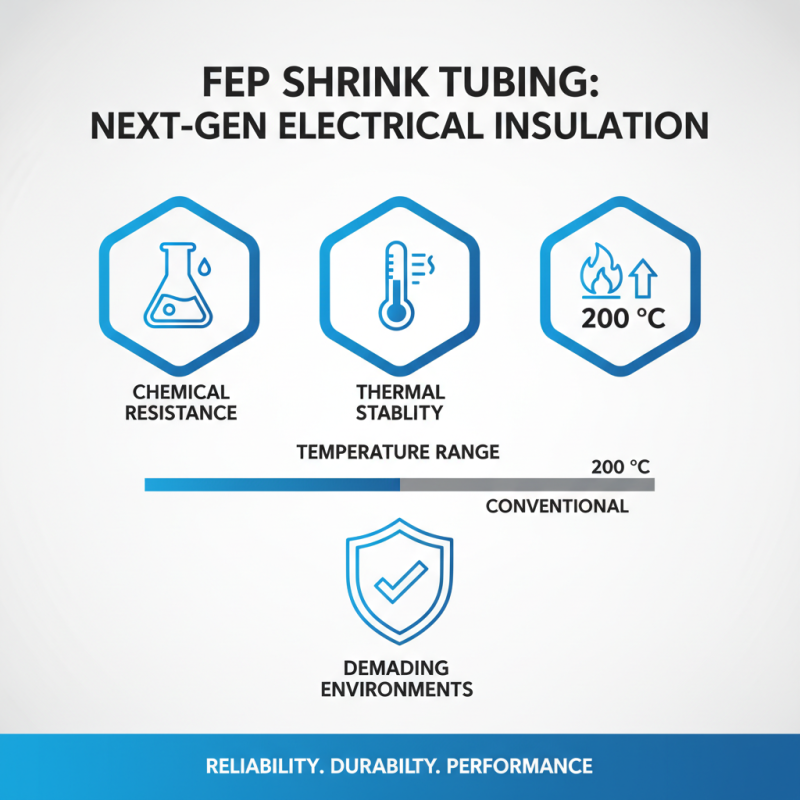
FEP shrink tubing is gaining attention in the electrical insulation market due to its unique properties. This material, fluorinated ethylene propylene (FEP), delivers excellent chemical resistance and thermal stability. It withstands temperatures up to 200 °C. This makes it ideal for demanding environments, where conventional materials might fail.
A recent industry report highlights that FEP shrink tubing can reduce electrical leakage by as much as 70%. This is crucial for applications requiring durability and reliability. The tubing's low friction surface can also prevent damage to wires, ensuring longer life for electrical components. Additionally, it offers superior optical clarity, helping in visual inspections for quality control.
Using FEP comes with challenges. It may be more expensive than traditional materials. Sourcing might also pose issues for smaller projects. Companies must weigh these factors when considering FEP shrink tubing. Nevertheless, its benefits are undeniable for high-performance applications.
FEP Shrink Tubing: Temperature Resistance and Chemical Compatibility
FEP shrink tubing is a versatile material known for its outstanding temperature resistance and chemical compatibility. It can withstand extreme temperatures, from -70°C to 205°C. This range makes it suitable for a variety of projects, especially in harsh environments. It’s not just about heat; this tubing is also resistant to many chemicals. This feature allows it to protect wires and connectors in industrial applications.
Using FEP tubing can enhance the durability of your projects. However, not every application requires such high performance. Sometimes, using a simpler material might suffice. A careful assessment of the environment and requirements is key. Choose FEP for demanding conditions but reflect on whether it's truly essential in less intensive applications. Balancing cost and performance is often tricky.
When working with FEP, consider the installation process as well. The tubing requires precise heat application to shrink properly. Improper heating can lead to uneven shrinkage, affecting its protective capabilities. In some cases, this can result in inadequate coverage or even exposure of the underlying material. It’s essential to approach each project with thoughtfulness and attention to detail.
FEP Shrink Tubing: Temperature Resistance and Chemical Compatibility
Applications of FEP Shrink Tubing Across Various Industries
FEP shrink tubing finds applications in diverse industries due to its unique properties.
This form of tubing provides excellent insulation,
chemical resistance, and temperature tolerance.
Many electronics manufacturers use FEP tubing to protect wires from moisture.
It prevents short circuits and ensures longer device life.
In the medical field, FEP tubing serves as a protective sheath for various instruments.
Its biocompatibility is vital for devices that
come into contact with the human body. Additionally, the automotive industry benefits from
FEP shrink tubing for protective casings and wiring harnesses. This helps in enhancing
durability and stability under
extreme conditions.
The aerospace sector also sees significant use of FEP tubing.
Components exposed to harsh environments require reliable insulation.
However, sourcing high-quality FEP can be challenging.
Ensuring proper installation is vital to maximizing its benefits.
Oversight can lead to costly failures down the line. It is essential to continually assess
its effectiveness in real-world applications.