


How to Choose the Best Steam Autoclave in 2026?
Choosing the best Steam Autoclave in 2026 is not simply a matter of buying the largest chamber or the newest touchscreen. The right unit must match your instruments, workload, room layout, and maintenance capacity. A crowded clinic may need quick cycles and straightforward loading. A laboratory processing bulky glassware may need more chamber space and flexible cycle settings. Small details matter: tray clearance, door swing, water quality, and access to service support.
The stakes are practical. The World Health Organization’s 2022 Global Report on Infection Prevention and Control estimates that 7 in 100 patients in acute-care hospitals in high-income countries acquire at least one healthcare-associated infection; in low- and middle-income countries, the figure is 15 in 100. Sterilization is one part of prevention, not a guarantee by itself. The CDC’s sterilization guidance, co-authored by infection-prevention expert William A. Rutala, states: “Steam is the preferred method for sterilizing critical medical and surgical instruments that are not damaged by heat, steam, pressure, or moisture.” That guidance is useful, but it does not choose a model for you.
Look closely at validated cycles, load documentation, safety features, and the manufacturer’s service network. Ask how routine testing and maintenance fit your actual schedule. Then compare total operating costs, not just the purchase price. A lower-cost unit can become expensive when downtime interrupts work. And yes, specifications can look reassuring on paper. Check them against your real loads before deciding.
Understand Steam Autoclave Types and Their Applications
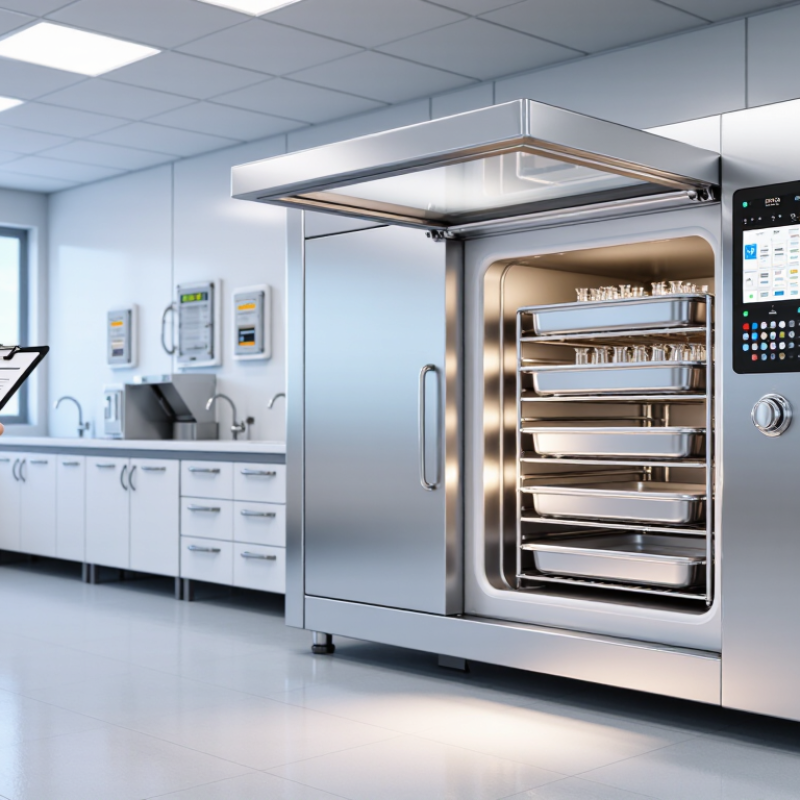
Steam autoclaves differ mainly in how they remove air, manage loads, and control exhaust. Gravity-displacement models push air out with incoming steam. They can suit unwrapped, heat-tolerant instruments and simple loads. For wrapped packs or porous materials, trapped air can block steam contact. A pre-vacuum model removes air before admitting steam, making it better suited to those challenging loads. The right choice depends on what you process daily. Not the largest chamber available.
Compact tabletop units fit clinics with limited space and modest throughput. Larger floor-standing units can handle heavier workloads, laboratory glassware, or multiple instrument packs. Liquids need special attention: a cycle designed for solid instruments may heat or cool liquid containers too quickly. Choose a validated liquid cycle with controlled exhaust, and follow container and load instructions. That detail is easy to overlook.
Match the autoclave type to the materials, packaging, and workload—not just chamber size. Check cycle records, load capacity, maintenance needs, and local service support before purchasing. A tightly packed chamber may prevent effective steam circulation, even in an advanced unit. Real loading patterns matter. If your work includes both porous packs and liquids, confirm that the model supports appropriate cycles for each. Some trade-offs remain. The cheapest unit may cost more in workflow delays.
How to Choose the Best Steam Autoclave in 2026? — Understand Steam Autoclave Types and Their Applications
| Autoclave Type or Cycle | How It Removes Air | Common Applications | Load Suitability | Key Selection Consideration |
|---|---|---|---|---|
| Gravity-displacement | Incoming steam displaces air through a drain or vent at the chamber’s lower part. | Laboratory media, unwrapped solid instruments, and other loads permitted by the sterilizer’s validated cycle. | Generally suited to simple, nonporous loads. Air removal can be less effective in wrapped items, narrow lumens, and porous materials. | Consider it for straightforward loads where the equipment’s instructions confirm the cycle is appropriate. Do not assume it can sterilize every load type. |
| Pre-vacuum (dynamic air removal) | A vacuum system removes air from the chamber and load before steam exposure; some systems use repeated vacuum pulses. | Healthcare instrument reprocessing and other applications requiring steam penetration into wrapped or porous loads. | Can support wrapped instruments and porous loads when the cycle and sterilizer are validated for them. Specific lumen devices require compatible cycle parameters. | Check the validated load range, vacuum performance, drying capability, and device instructions. A pre-vacuum cycle is not automatically suitable for every instrument. |
| Steam-flush pressure-pulse (SFPP) | Repeated steam flushes and pressure changes remove air without relying on a conventional vacuum phase. | Applications specified by the sterilizer manufacturer, including some wrapped or porous loads. | Suitability depends on the chamber design, cycle validation, packaging, and load configuration. | Confirm that the cycle is validated for the exact load and packaging. Do not treat SFPP and pre-vacuum cycles as interchangeable. |
| Liquid cycle | Uses a controlled heating and cooling profile to sterilize liquids while managing pressure and the risk of boil-over. | Culture media, aqueous solutions, and other heat-stable liquids approved for steam sterilization. | Designed for suitable liquid containers and fill volumes; it is generally not the right cycle for wrapped instruments or porous loads. | Check container compatibility, load volume, venting or closure requirements, and the cycle’s validated liquid load. Allow for controlled cooling before handling. |
| Tabletop sterilizer format | Air-removal method varies: compact units may use gravity displacement or dynamic air removal. | Dental, clinical, laboratory, and other settings with lower-volume instrument loads. | Capacity and eligible loads vary by model. Some units are designed for solid instruments; others support wrapped or hollow loads when specified. | Choose by chamber capacity, daily throughput, load type, cycle options, installation needs, and applicable regulatory requirements—not size alone. |
Selection note: These categories can overlap: “tabletop” describes a sterilizer format, while gravity, pre-vacuum, and SFPP describe air-removal approaches. Always follow the sterilizer’s validated cycle instructions and the items’ reprocessing instructions. Steam sterilization is appropriate only for materials and devices compatible with moist heat.
Related Posts
-

The Ultimate Guide to Using Steam Autoclaves for Optimal Sterilization Results
-

Innovative Solutions for Optimizing Steam Autoclave Performance
-

How to Choose the Right Steam Autoclave for Your Laboratory Needs
-
Best Steam Autoclave for Efficient Sterilization Solutions?
-

How to Choose the Best Steam Autoclave for Your Needs?
-

How to Optimize Your Ethylene Oxide Sterilization Process for Maximum Efficiency
