Top 10 Tips for Choosing the Right Medical Sutures?
Choosing the right medical sutures can significantly impact healing outcomes. Surgeons and healthcare providers face various options available in the market. It is essential to understand what makes a suture suitable for specific procedures.
Medical sutures come in different materials, sizes, and types. Each choice has unique characteristics that play a role in their application. For instance, absorbable sutures dissolve in the body, while non-absorbable sutures may require removal. Understanding the differences can help avoid complications.
When selecting medical sutures, one should consider the patient's needs and the nature of the procedure. Factors such as tissue type and healing time are crucial. It is easy to overlook these details, yet they can lead to suboptimal results. A thoughtful approach ensures better patient outcomes and reduces potential issues during the healing process.
Understanding the Different Types of Medical Sutures Available
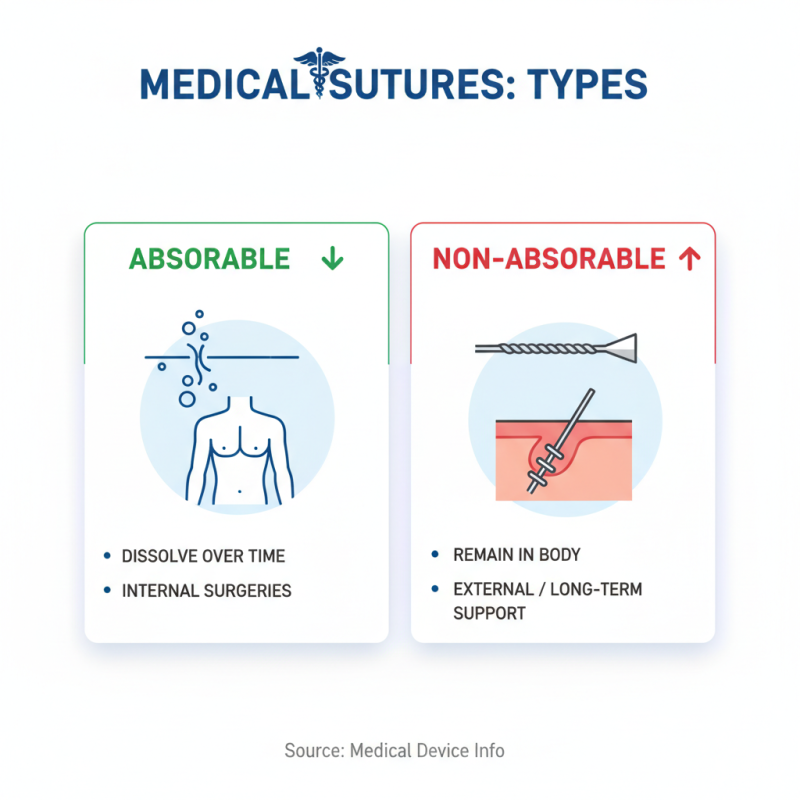
When selecting medical sutures, it’s crucial to understand the various types available. Sutures are typically classified into absorbable and non-absorbable categories. Absorbable sutures dissolve within the body over time, eliminating the need for removal. They are ideal for internal surgeries. Non-absorbable sutures, on the other hand, remain in the body. They are suitable for external wounds or areas that require long-term support.
Different materials are used for sutures, such as silk, cotton, or synthetic polymers. Each material has its own characteristics. For example, silk sutures are known for their ease of handling but may cause tissue reaction. Conversely, synthetic sutures like polyglycolic acid offer minimal tissue irritation but vary in their absorbable rates. Surgeons often choose based on the specific needs of the patient and the nature of the wound.
Choosing the right suture can be challenging. Various factors may influence the decision, including the wound location and patient's health status. The right suture can promote healing, while the wrong choice may lead to complications. It’s essential to weigh these factors carefully. Decisions made under pressure might not always yield the best outcomes. Thoughtful consideration of each suture type's healing properties can create better surgical results in the long term.
Evaluating Suture Material: Absorbable vs. Non-Absorbable Options
When selecting the right medical sutures, it's essential to consider whether to use absorbable or non-absorbable options. Absorbable sutures are designed to break down over time. They eliminate the need for removal. These sutures are ideal for internal closures. They often consist of materials like polyglycolic acid. Their main advantage is convenience.
Non-absorbable sutures, on the other hand, are meant to stay in the body until removed. Commonly made from materials such as nylon or silk, they provide lasting support. This type is typically used for external wounds. They can offer strength for long-term healing. However, they require follow-up appointments for removal. It's crucial to weigh the pros and cons of each type.
When choosing sutures, consider tissue type and healing time. Take into account the patient's overall health as well. Some patients might experience allergies. This can complicate the healing process. Mistakes can lead to complications. Reflecting on the choice of material is key. Each decision can greatly influence the outcome.
Assessing the Size and Thickness of Sutures for Specific Procedures
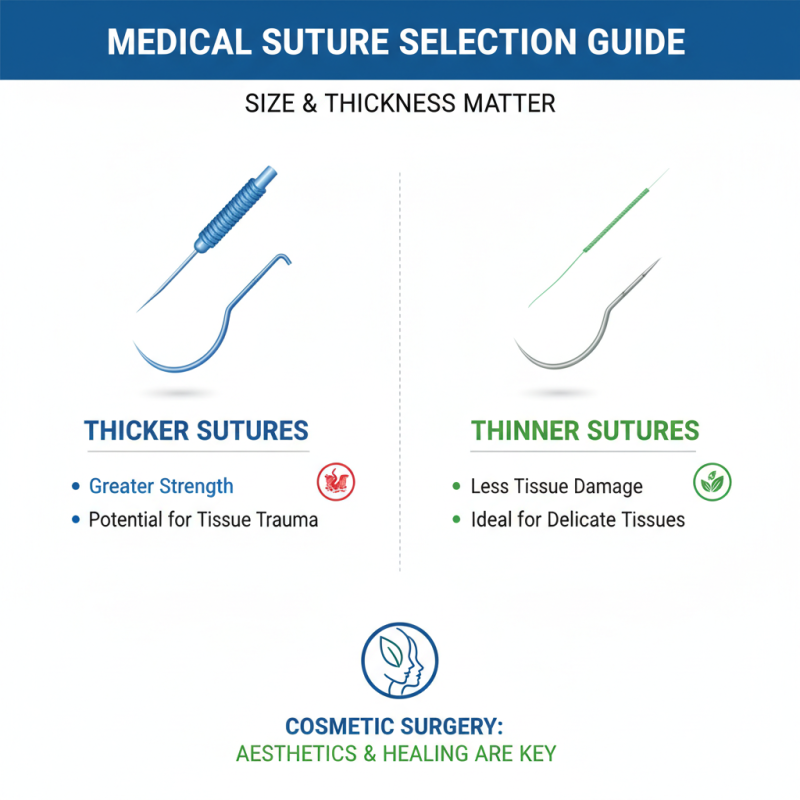
When selecting medical sutures, size and thickness play a crucial role. Different procedures demand different suture characteristics. A larger suture may be stronger but could damage delicate tissues. Choosing a suture that is too thick may lead to unnecessary tissue trauma. This is especially true in cosmetic surgeries, where aesthetics and healing are essential.
Consider the area you are suturing. A small incision in the skin may require finer sutures, while internal organs might need thicker, more robust options. Your choice should also reflect the tension needed at the site. Too much tension can lead to complications, while too little may result in wound dehiscence. This requires careful evaluation and experience to determine.
Not all sutures are created equal. Some practitioners may overlook the importance of matching suture thickness to tissue type. It can lead to hardened scar tissue or inadequate healing. Reflecting on past experiences can improve future choices. Always ask yourself: does the size truly suit the procedure? It's an ongoing learning process.
Choosing the Right Needle for Optimal Suture Placement
Choosing the right needle is crucial for optimal suture placement. The needle's characteristics, such as its shape, size, and type, greatly impact the success of the suturing process. For instance, a study published in the Journal of Surgical Research indicates that curved needles often reduce tissue trauma more effectively than straight needles. This is because curved needles allow for better access and maneuverability, particularly in tighter spaces.
It’s important to consider the suture type in conjunction with the needle. There are various needle designs, such as taper point, cutting, and reverse cutting. Each design has specific applications. For example, taper point needles work well for soft tissue. Conversely, cutting needles are more suitable for tough tissue, like skin. A report from the Association for the Advancement of Medical Instrumentation highlights that improper needle choice can lead to complications. In fact, nearly 25% of suturing errors are attributed to mismatched needles and sutures.
However, selecting the right combination often feels overwhelming. Factors like patient anatomy and wound type create additional complexity. Sometimes, even experienced surgeons may struggle with these choices, leading to ineffective suturing. Continuous education and training are essential for practitioners to make informed decisions. This ongoing learning helps mitigate errors and ensures higher patient safety.
Top 10 Tips for Choosing the Right Medical Sutures
Considering the Surgical Site and Tissue Type When Selecting Sutures
When selecting medical sutures, considering the surgical site and tissue type is crucial. Each tissue type has unique properties. For example, skin demands sutures that provide high tensile strength, while delicate internal organs may require softer, absorbable materials. The surgical site conditions also matter. Higher tension areas need more durable sutures.
Pay attention to the healing time of tissues. Fast-healing tissues may not need permanent sutures. Use absorbable sutures that dissolve over time. This reduces irritation and eliminates the need for additional procedures. Always evaluate if this is the best choice for patient comfort.
Ultimately, surgical skills and experience influence suture selection. Some surgeons might prefer one type consistently, while others are open to alternatives. It’s important to analyze the pros and cons of each suture type in different scenarios. Consider potential complications. Do the chosen sutures match the expected healing process? Understanding these details can enhance patient outcomes significantly.
Top 10 Tips for Choosing the Right Medical Sutures
| Tip Number |
Tip |
Consideration |
Recommended Suture Types |
| 1 |
Assess the Surgical Site |
Understand tissue characteristics and healing potential |
Absorbable sutures (e.g., Polyglycolic acid) |
| 2 |
Consider Tissue Type |
Match suture material with tissue type for better outcomes |
Non-absorbable sutures (e.g., Nylon) |
| 3 |
Evaluate Suture Size |
Choose size based on tissue thickness and tension |
Varied sizes from 0 to 6-0 |
| 4 |
Check Knot Security |
Ensure knots hold well under tension |
Silk sutures for ease of knot tying |
| 5 |
Review Handling Characteristics |
Evaluate ease of use in suturing |
Monofilament sutures for minimal drag |
| 6 |
Consider Allergies |
Avoid materials that cause allergic reactions |
Synthetic sutures (e.g., Polyester) |
| 7 |
Plan for Infection Control |
Use sutures that minimize infection risk |
Antibacterial coated sutures |
| 8 |
Assess Absorption Rate |
Choose based on tissue healing timings |
Fast-absorbing sutures |
| 9 |
Understand Suture Types |
Know the differences between absorbable and non-absorbable |
Both types depending on the surgery |
| 10 |
Consult with Peers |
Seek advice from experienced professionals |
Colleagues’ recommendations |