Where to Find China Top Tau 217 Suppliers?

Finding China’s leading Tau 217 suppliers requires more than comparing prices or polished product pages. Tau 217 usually refers to phosphorylated tau 217, a biomarker studied in Alzheimer’s disease research and blood-based testing. Supplier claims should therefore be checked against assay documentation, not accepted at face value. Look for clear details on sample type, analytical sensitivity, specificity, detection range, and validation methods. Small details matter. A missing lot number can complicate a laboratory’s review.

Professional sources help set context. The Alzheimer’s Association’s 2024 report describes the growing public-health burden of Alzheimer’s disease in the United States. Its 2024 revised criteria also discuss biomarkers within the diagnostic framework. These sources do not rank Chinese manufacturers, but they help explain why reliable biomarker testing and transparent evidence matter. For supplier screening, request technical datasheets, certificates of analysis, quality-system documents, and published validation studies. Check whether results are peer-reviewed and whether the tested assay matches the product being offered.

This guide explains where to identify China-based Tau 217 suppliers and how to assess their credibility. Company directories can provide leads, but they are not proof of product performance. Ask suppliers about manufacturing location, batch consistency, technical support, and sample availability. Compare answers in writing. A confident sales response is useful, but it is not validation. The process can feel repetitive, and sometimes documentation is incomplete. That deserves attention, not guesswork.
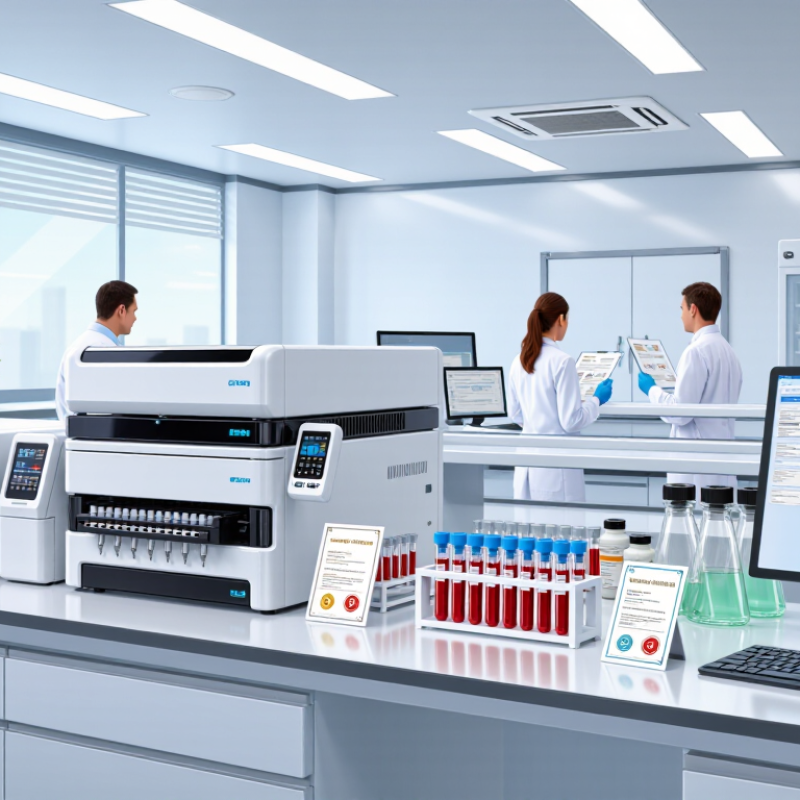
Where to Find China Top Tau 217 Suppliers?

What Is Tau 217 and How Is It Used?

What Is Tau 217 and How Is It Used?

Tau 217 usually means phosphorylated tau at threonine 217, often written as p-tau217. Tau is a protein associated with nerve cells. In Alzheimer’s disease research, changes in p-tau217 can help indicate disease-related brain biology. The marker can be measured in blood plasma or cerebrospinal fluid using validated laboratory assays. The distinction matters. A result may support assessment, but it cannot diagnose Alzheimer’s disease on its own.

The Alzheimer’s Association’s 2024 Alzheimer’s Disease Facts and Figures report estimates that 6.9 million Americans aged 65 and older are living with Alzheimer’s. It projects this figure could reach 13.8 million by 2060. That growing burden helps explain interest in accessible biomarkers, including blood-based p-tau217 tests. Still, performance depends on the assay, sample handling, and the population being tested. One number is not the whole picture.

When comparing Tau 217 suppliers in China, laboratories can review assay sensitivity, detection limits, sample requirements, calibration methods, and batch-to-batch consistency. Request validation data for the intended sample type, rather than relying only on a product sheet. Storage conditions matter too; repeated freeze-thaw cycles can affect sample quality. A polished specification is useful, but independent verification remains essential.

Overview of China’s Tau 217 Supplier Landscape

China’s Tau 217 supplier landscape is best viewed through manufacturing capacity and product-level verification. UNIDO’s International Yearbook of Industrial Statistics 2024 reports that China accounted for about 31.8% of global manufacturing value added in 2022. This scale supports a broad supplier base, but it does not confirm that any factory makes a consistent Tau 217 grade.

Suppliers may be direct manufacturers, processing firms, or export-focused trading companies. Their capabilities can differ sharply. Ask for a current specification sheet, batch-level test results, sample material, and written confirmation of production origin. Check whether the stated grade, packaging, and lead time match your intended use. Small details matter.

Public trade data rarely isolates a product by commercial name. The WTO’s World Trade Statistical Review 2024 records China’s merchandise exports at about US$3.38 trillion in 2023, but that figure cannot identify Tau 217 producers. Treat it as context, not proof of product availability. That distinction is easy to miss. A careful supplier review should compare documentation, sample consistency, production capacity, and response quality—not just quoted price.

Where to Find China Top Tau 217 Suppliers? - Overview of China’s Tau 217 Supplier Landscape

Product identification note: “Tau 217” alone does not uniquely identify a standardized chemical, material, or commercial grade. The supplier categories below describe practical sourcing routes; they are not a verified directory of companies or confirmation that a specific product is available.

Supplier or Sourcing Route Typical Offering Best Fit Information to Confirm Practical Considerations
Specialty chemical manufacturers Defined chemical products, intermediates, or custom-made materials when the substance and specification are clearly identified. Buyers who can provide a chemical name, CAS Registry Number where applicable, purity target, and intended use. Identity, composition, purity method, safety data sheet, certificate of analysis, and manufacturing or testing scope. Do not rely on “Tau 217” as the sole specification. Ask for documentation tied to the exact material and batch.
Laboratory reagent and research-material suppliers Small research quantities, reference materials, or catalog-listed products, subject to the supplier’s current inventory. Universities, laboratories, and R&D teams evaluating a product before larger-scale procurement. Catalog identifier, available pack sizes, stated grade, batch documentation, storage conditions, and intended-use restrictions. Catalog availability does not establish suitability for industrial, clinical, food, or other regulated applications.
Custom synthesis and contract manufacturing providers Made-to-order development or production based on a complete structure, composition, process brief, and acceptance criteria. Projects for which the required material is not a standard catalog item. Technical feasibility, sample-development plan, scale-up capability, quality agreement, intellectual-property terms, and production lead time. Request a written feasibility assessment before treating an inquiry or quotation as evidence of established supply.
Isotope or radiochemical supply channels Potentially relevant only if “217” denotes a particular radionuclide or isotope and the requested nuclide is actually producible and distributable. Specialist research or regulated applications with a precisely specified isotope requirement. Nuclide identity, activity and reference date, half-life, production route, radiological documentation, transport classification, and applicable licences. Radioactive materials require specialist regulatory and transport checks. Confirm feasibility and authorization before requesting a purchase quotation.
Export-oriented sourcing and trading intermediaries Supplier search, communication, consolidation, and export coordination for products sourced from manufacturers or distributors. Overseas buyers needing support with supplier discovery, logistics, or export documentation. Actual producer identity, authorization to represent the producer, traceability, document origin, inspection arrangements, and payment terms. Verify whether the intermediary is the manufacturer or a reseller, and independently validate product and compliance documents.
Testing and quality-control laboratories Independent analytical testing or verification of specified properties; not necessarily a source of the material itself. Buyers needing to confirm composition, purity, or conformity before acceptance. Test method, method scope, sample requirements, measurement uncertainty where relevant, and laboratory accreditation scope. Agree on acceptance methods and limits before ordering. A test report should identify the sample and applicable method.
Product definition and supplier-screening stage Clarification of what “Tau 217” refers to before supplier comparison or purchase. All buyers when the term is a project name, shorthand, trade description, or incomplete technical designation. Full chemical or material name, CAS number if applicable, formula or structure, grade, specification, application, and regulatory status. This is the essential first step: an ambiguous name cannot support a reliable comparison of suppliers, prices, or lead times.

Buyer checklist: Define the product and specification first; request a current quotation, batch-specific documentation, sample policy, production or stock status, delivery terms, and relevant export or regulatory documents. Availability, minimum order quantity, price, and lead time depend on the exact product and should be confirmed directly for each order.

Where to Find Chinese Tau 217 Suppliers

Chinese Tau 217 suppliers can be found through industrial sourcing directories, trade exhibitions, and referrals from buyers in the same sector. Search using the exact grade name alongside the product form and intended use. A supplier may list a similar designation, but that does not confirm an exact match. Details matter.

Before requesting a quote, prepare a short specification sheet. Include dimensions, tolerances, required quantity, packaging, and any relevant performance criteria. Ask for a current datasheet, inspection records, and a sample from the same production process. Clear questions make comparisons more useful. I would not treat a polished catalog as proof of manufacturing capability.

Check whether the company operates a production site or mainly handles trading. Request a live factory tour, recent production photos, or a video call focused on equipment and inspection steps.

Verify that the business name on the quotation matches its registration documents, and agree on sample approval and delivery terms in writing. Small checks help. Some listings provide incomplete information, so expect a few follow-up questions and allow time for independent verification before placing a larger order.

How to Verify Supplier Credentials and Product Quality

Where to Find China Top Tau 217 Suppliers?

How to Verify Supplier Credentials and Product Quality

A reliable Tau 217 supplier should provide more than a polished catalog. Check that its registered company name matches its contracts, invoices, and quality certificates. Confirm each certificate’s validity, issuing body, and product or process scope. The ISO Survey 2022 recorded 1,265,216 valid ISO 9001 certificates worldwide. That figure shows broad adoption of quality-management systems, but certification alone does not prove a specific batch meets your requirements.

Ask for a recent inspection report, a batch-linked certificate of analysis, and clear acceptance criteria. Compare the report with your drawing or specification: dimensions, material details, tolerances, and test methods should match. For a higher-risk order, send sealed samples from production to an independent laboratory. Check that the lab’s accreditation covers the tests requested. Keep the lot number and sample photographs. A document can look convincing and still be outdated; I would verify it directly rather than assume.

Tips: Request a video inspection of the marked goods, packaging, and measuring tools. Start with a small trial order. Record any mismatch, even a minor one, and ask how the supplier will prevent it next time. Small checks matter.

How to Compare Quotes, Lead Times, and Supply Terms

When comparing China-based Tau 217 suppliers, request quotes against one identical specification. State dimensions, tolerances, material requirements, packaging, minimum order quantity, and inspection criteria. Otherwise, a low price may simply exclude important details.

Small gaps matter. Ask suppliers to separate tooling, sample, production, and freight costs, then confirm the currency and payment milestones. A clear quote should also state how long it remains valid.

Compare lead times in stages: sample approval, production, quality checks, and transit.

The World Bank’s 2023 Logistics Performance Index ranked China 19th among 139 economies, with a score of 3.7 out of 5. That is useful context, not proof of any factory’s reliability. UNCTAD’s Review of Maritime Transport 2024 reported that maritime trade grew 2.4% in 2023, while forecasting 2% growth for 2024.

Shipping conditions can shift; request a dated schedule and ask what could delay dispatch.

Proof matters. Check recent inspection records, production capacity, and references for comparable orders. I would still treat a polished spreadsheet cautiously: supplier promises need to match written supply terms, including defect handling, packaging, and responsibility for unexpected delays.

Article Source: