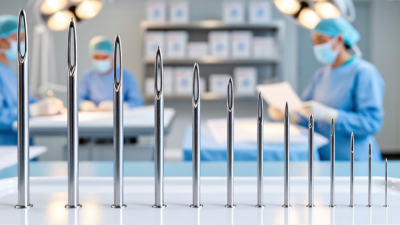
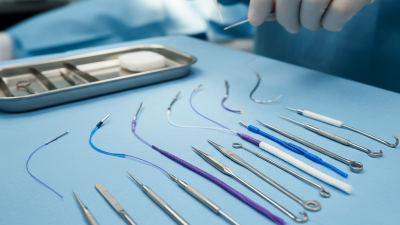
Choosing a Suture Needle is a practical decision shaped by tissue, access, and the closure technique. A curved needle can turn smoothly through a confined incision, while a straight needle may suit accessible tissue. The point matters, too: a taper point separates tissue fibers, while a cutting edge is designed to pass through tougher tissue. Small curves matter. So does the angle of approach.
The scale of surgical care makes these choices more than a catalog detail. Weiser and colleagues estimated that 234 million major operations were performed worldwide in 2004, in a study published in The Lancet in 2008. That estimate is historical, not a current annual count, but it illustrates the breadth of procedures requiring reliable closure materials. This guide introduces 10 common suture needle types by shape, point design, and typical application. It is an orientation, not a substitute for device instructions, clinical training, or institutional protocols. The right needle varies with the tissue and the surgeon’s approach; no single type wins every case. Even experienced teams may weigh the trade-offs differently. That distinction matters.
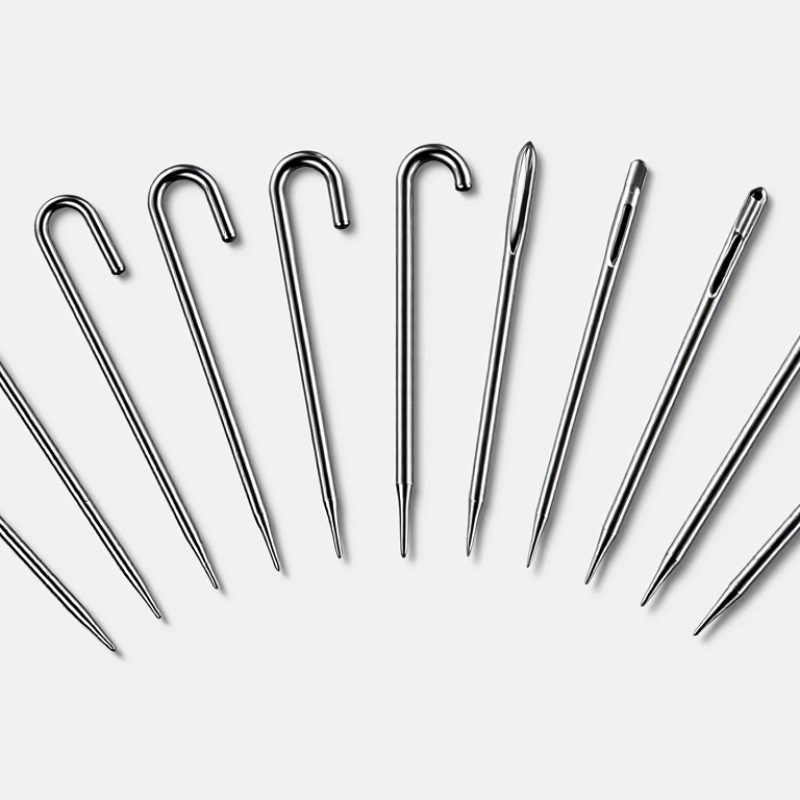
Suture needles are classified by curvature, point design, body shape, size, and thread attachment. These features describe how a needle moves through tissue and how it handles under controlled conditions. Curvature commonly ranges from straight to 1/4, 3/8, 1/2, or 5/8 circle. A tighter curve can help in confined spaces, while a straighter needle may suit accessible tissue. Fit matters.
Point design also matters. Taper points separate tissue fibers, while cutting and reverse-cutting points pierce tougher tissue. Blunt points may be chosen for delicate or friable tissue. Needle bodies can be round, triangular, or flattened, affecting grip and passage. Length and diameter should match the tissue and the procedure; a larger needle is not automatically better. Eyed needles require threading, whereas swaged needles have suture material attached at the end.
Tips: Check the needle’s curvature, point, and size against the procedure’s requirements and clinical guidance. Inspect packaging and follow the supplied instructions. Classification charts are useful, but they cannot capture every handling difference. That limitation is worth remembering. A familiar category does not guarantee the right choice for every case.
Cutting needles are designed to pass through dense tissue with less pushing force than round-bodied needles. Their triangular cross-section creates a sharp point and cutting edges.
Conventional cutting needles place the third edge along the inner curve. This can help penetrate tough tissue, but the incision may extend toward the wound edge under tension. Small geometry matters.
Reverse-cutting needles position the third edge on the outer curve, away from the wound. This design can reduce the chance of the needle cutting through the edge as tension is applied.
They are commonly considered for skin and other firm tissues, though the best choice depends on tissue thickness, suture material, and technique. Not interchangeable.
Side-cutting needles use lateral edges to separate tissue, rather than cutting in the same way as conventional triangular needles. Flat, spatula-shaped designs are used for delicate tissues, including in some eye procedures, where limiting unwanted penetration is important. Their narrow, specialized role is easy to overlook.
Needle selection still depends on the procedure and the clinician’s judgment; a familiar design may not suit every tissue. I would avoid treating “sharper” as automatically better.
What Are the Top 10 Types of Suture Needles?
Tapered Needles: Round-Bodied, Taper-Cut, and Blunt-Point
Tapered needles are designed to pass through tissue with less cutting than conventional cutting needles. A round-bodied needle has a smooth, rounded profile that parts tissue as it advances. It is often selected for soft tissue, such as bowel or muscle, when controlled passage matters. Taper-cut needles combine a cutting tip with a tapered body, helping them enter tougher or more fibrous tissue. Blunt-point needles have a rounded tip that pushes through delicate, friable tissue rather than sharply piercing it. Small details matter. The best choice depends on both the tissue and the procedure.
Tips: Match the needle to the tissue, not just the suture thread. Check the needle’s curvature and size, too. Follow the device instructions and your organization’s clinical guidance. If the tissue type or needle design is unclear, pause and verify the selection.
It is easy to focus on the tip and overlook the needle body. Yet that shape affects how the needle travels and how much force may be needed. Round-bodied and blunt-point needles are not interchangeable: one is designed for controlled passage through suitable soft tissue, while the other is intended for particularly fragile tissue. Taper-cut designs can help with tougher tissue, but they still require careful handling. A quick visual check may not reveal every design difference.
| # | Needle Type | Point and Body Design | Common Tissue Applications | Typical Characteristics |
|---|---|---|---|---|
| 1 | Round-bodied taper Tapered |
A slender, rounded body narrows smoothly to a sharp point. It separates tissue fibers rather than making a deliberate cutting incision. | Soft, easily penetrated tissues such as bowel, blood vessels, peritoneum, and muscle. | Designed to reduce tissue cutting and tearing in tissues that can be penetrated by a tapering point. |
| 2 | Taper-cut Tapered |
A tapered body with a short cutting tip, commonly featuring a cutting edge near the point. | Dense or fibrous tissues, including fascia and some cardiovascular tissues. | Combines initial cutting penetration with a rounder body that follows the point through tissue. |
| 3 | Blunt-point Tapered |
A rounded, relatively blunt tip with a tapered body; the point is less sharp than a conventional taper point. | Friable tissues such as liver, kidney, and other soft parenchymal tissues. | Helps limit accidental puncture and tissue damage, but requires more force to penetrate than a sharp-point needle. |
| 4 | Conventional cutting | A triangular cross-section with the cutting edge on the inner, concave curve of the needle. | Skin and other firm tissues that require a cutting point for penetration. | Penetrates tough tissue effectively; the inner cutting edge can increase the risk of tissue cut-through under tension. |
| 5 | Reverse cutting | A triangular cross-section with the cutting edge on the outer, convex curve of the needle. | Skin, dense connective tissue, and other firm tissues. | The outer cutting edge is intended to reduce the tendency for the needle to cut toward the wound edge. |
| 6 | Side-cutting / spatula | A flattened body with lateral cutting edges and a low-profile point; it is designed to pass through tissue in a defined plane. | Corneal and other delicate ocular tissues. | Provides controlled, shallow passage through thin tissue; not generally intended for routine skin closure. |
| 7 | Trocar-point | A sharply pointed tip with a cutting or penetrating tip profile, often transitioning to a round body. | Dense tissue and selected procedures where a strong penetrating point is needed. | Designed for penetration through resistant tissue; the specific geometry varies by needle design. |
| 8 | Diamond-point | A pointed profile with multiple cutting facets that form a diamond-like cross-section near the tip. | Selected dense or fibrous tissues requiring a penetrating cutting point. | Multiple cutting surfaces assist penetration; availability and exact geometry depend on the needle design. |
| 9 | Lancet-point | A blade-like, elongated point with cutting edges designed to make a narrow incision during penetration. | Selected procedures involving firm tissue where an incising point is appropriate. | Can penetrate resistant tissue readily, but its cutting action may increase the risk of tissue injury. |
| 10 | Straight needle Needle configuration |
A straight rather than curved needle; it may be manufactured with different point and body designs. | Accessible tissue and situations where the needle can be passed directly by hand. | This describes needle shape, not a distinct point geometry. Handling and suitability depend on the point, tissue, and procedure. |
Note: Needle selection depends on tissue characteristics, procedure, and the required suture technique. Point names and exact geometries may vary among needle designs.
Specialty suture needles address access challenges that standard curves may not handle well. A straight needle follows a direct path and can be guided by hand when the site is easy to reach. In a narrow space, that same path may be awkward. Small detail, big difference. A spatula needle has a flattened, blade-like profile rather than a round body. It is commonly selected for delicate ophthalmic tissues, where controlled passage along a tissue plane matters. Its shape does not remove the need for careful handling or appropriate training.
A J-shaped needle has a tight hook that can help reach tissue when the entry angle is restricted. The short curve may feel unfamiliar, so the operator should check the needle’s orientation before passing it. Compound-curved needles combine more than one curve, allowing a path that bends around nearby structures. They can be useful when a simple arc does not fit the surgical approach, but they are not automatically the better choice. Needle selection depends on access, tissue type, suture size, and the procedure. Even experienced users can find an unusual shape less intuitive at first; matching the geometry to the task takes judgment.
Suture needle choice starts with the tissue, not a favorite shape. A taper-point needle separates soft tissue fibers with less cutting, making it useful in bowel or muscle. Dense skin and fascia usually need a cutting edge. Conventional cutting needles place the edge on the inner curve; reverse-cutting needles place the edge on the outer curve, helping reduce cut-through at the wound edge. Taper-cut needles combine a piercing tip with a less aggressive body. Blunt-point needles can suit friable tissue, while spatula needles are designed for delicate eye surgery. Different jobs.
Access matters just as much. A straight needle can work well in shallow, open areas, but it may be awkward in a deep cavity. Curved needles—commonly 1/4-, 3/8-, 1/2-, or 5/8-circle—let the surgeon rotate the wrist through restricted spaces. A 3/8-circle needle often fits accessible sites; a tighter curve may help when exposure is limited. J-shaped needles can reach confined areas, though they are not a universal solution. Needle size, suture material, and tissue thickness also affect handling and trauma. I would not treat any chart as a substitute for supervised technique; even a well-matched needle can cause damage if driven at the wrong angle. There is no perfect default.
As a trusted co-development partner, Teleflex Medical OEM supports industry leaders in the design and development of medical devices with the unparalleled expertise that improves speed, flexibility, and value.
©2025 Teleflex Incorporated. All rights reserved. Teleflex, EPIC Medtec, Force Fiber Fusion, and “Work With The Experts” are trademarks or registered trademarks of Teleflex Incorporated in the U.S. and other countries. Additional trademarks are property of their respective owners.